If your upper front teeth cover your lower teeth far more than they should when you bite down, you may have an overbite — and overbite treatment Lombard IL families ask us about often starts with one simple question: does this actually need fixing, or is it just how my teeth look? The honest answer is that some overlap is normal and healthy. An overbite becomes a treatment question when the overlap is deep enough to wear teeth down, strain your jaw, or trap your lower teeth against the gums behind your upper teeth.
This guide explains what an overbite is, how to tell a normal overlap from a deep bite, what causes it, and the seven proven ways orthodontists correct it in children, teens, and adults. It also covers what happens at a first visit in our Lombard and Orland Park offices, so you can decide on next steps with clear information instead of guesswork.
What Is an Overbite, Exactly?
An overbite is the vertical overlap of the upper front teeth over the lower front teeth when your mouth is closed. It is different from an overjet, which is horizontal — upper teeth that stick too far forward. The two often appear together, but they are measured differently and sometimes treated differently.
Cleveland Clinic describes it this way: a small overlap is expected, but when the upper teeth overlap the lower teeth by more than about 2 to 4 millimeters, it is considered an overbite that could lead to jaw pain, tooth erosion, and other oral health problems. Orthodontists also use the term “deep bite” when the overlap is severe enough that the lower front teeth bite into the gum tissue behind the upper front teeth.
Why does a few millimeters matter? Because your bite is a working system. When the front teeth overlap too deeply, chewing forces land in the wrong places, thousands of times a day. Over years, that misdirected force is what wears enamel, chips edges, and irritates the jaw joints.
7 Signs Your Overbite Needs an Evaluation
Many people with a significant overbite have never been told they have one. Watch for these signs — any one of them is a good reason to book an evaluation:
- Your upper front teeth cover most of your lower front teeth when you smile or bite.
- Your lower front teeth touch the roof of your mouth or the gums behind your upper teeth.
- The edges of your lower front teeth look worn, flat, thin, or chipped.
- Your chin looks small or set back compared with the rest of your face.
- You get jaw soreness, clicking, or tension headaches, especially after chewing.
- Your front teeth are hard to clean, or your gums bleed around crowded lower teeth.
- Your child sucked a thumb or used a pacifier past age 3, and the front teeth now overlap deeply.
None of these signs means you definitely need treatment. They mean a specialist should measure the bite. That measurement — not a photo, not a guess — is what overbite treatment Lombard IL planning is built on.
What Causes an Overbite?
Overbites usually come from a combination of inherited jaw shape and tooth position, sometimes with a childhood habit added in. Cleveland Clinic lists genetics — jaw shape and size run in families — as a leading cause, along with thumb-sucking or pacifier use past age 3, tongue-thrusting, excessive nail biting, and teeth grinding.
Orthodontists separate causes into two broad groups, because the cause shapes the treatment:
- Dental overbite: the jaws are reasonably aligned, but the teeth themselves are positioned or angled in a way that deepens the overlap — for example, upper front teeth that tilt back, or lower front teeth that have over-erupted.
- Skeletal overbite: the jaw relationship itself is the driver — typically a lower jaw that sits back or has grown less than the upper jaw. Skeletal causes are common in the “deep bite” cases reviewed in the research literature.
This distinction is the single most important thing an evaluation establishes. A dental overbite in a Lombard teen and a skeletal overbite in an adult may look similar in a mirror, but they are corrected in different ways and on different timelines. Getting that diagnosis right is the first step of the overbite treatment Lombard IL patients receive at either of our offices.
Why Treat an Overbite Instead of Watching It?
A mild overbite with no symptoms can sometimes simply be monitored, and a good orthodontist will tell you so. But a deep or worsening overbite is not just a cosmetic issue. The American Association of Orthodontists (AAO) notes that well-aligned teeth reduce plaque traps, help prevent uneven wear, and support comfortable chewing, breathing, and speaking. A deep bite works against all three:
- Tooth wear and damage: excessive contact accelerates enamel wear on the contacting surfaces, and in severe cases the lower teeth damage the gum tissue behind the upper front teeth.
- Jaw discomfort: a bite that closes too deeply can push the lower jaw into an uncomfortable position and strain the jaw joints and chewing muscles — Cleveland Clinic lists jaw pain among the problems an overbite can cause.
- Harder hygiene: overlapped, crowded front teeth trap plaque, raising the effort needed to keep gums healthy.
- Growth effects in children: left alone, a deep bite can restrict the lower jaw’s freedom to grow forward, which is one reason timing matters for younger patients.
Overbite Treatment Lombard IL: The 7 Options Explained
There is no single “overbite device.” Effective overbite treatment Lombard IL plans usually combine two or three of the tools below, chosen after the cause — dental, skeletal, or both — is identified. A 2024 systematic review of deep-bite correction in growing patients, published in Cureus and indexed on PubMed Central, found several effective approaches and no single method that is best for everyone, which matches everyday clinical experience: the right mechanics depend on the patient.
1. Braces With Bite-Correcting Mechanics
Braces remain the most versatile tool for correcting an overbite. Beyond straightening teeth, specific wire shapes and mechanics can gently intrude (move up) over-erupted front teeth or level the curve of the lower teeth, opening the bite in a controlled way. Our common treatments page outlines the bite problems braces routinely address at both offices.
2. Orthodontic Elastics (Rubber Bands)
Small elastics worn between the upper and lower teeth are the classic bite-correcting partner to braces — and, with certain attachments, to clear aligners. For an overbite pattern, elastics help bring the bite relationship forward into balance. They only work when worn as directed, which is why elastic wear is the part of treatment patients control most directly.
3. Bite Turbos and Bite Plates
These small, temporary additions — a tiny ramp behind the front teeth or on the molars, or a removable plate — stop the teeth from closing all the way while the bite is being opened. They protect lower brackets from being bitten off and give the orthodontist room to level the bite safely. Patients usually adapt to them within days.
4. Clear Aligners for Selected Cases
For mild to moderate overbites in responsible teens and adults, clear aligners can be planned to level the bite and improve the overlap, often with small tooth-colored attachments and, in some plans, elastics. Aligners are one option inside overbite treatment Lombard IL planning — not a promise for every bite. Deep skeletal overbites usually need the control of braces or additional mechanics, and we will say so plainly at your consultation.
5. Growth Guidance for Children
Because children’s bones are still growing, orthodontists can often guide jaw development itself. Cleveland Clinic notes that overbite treatment for children may involve palate expanders to widen the upper jaw during growth, headgear in selected cases to correct jaw position, braces to align the teeth, and occasionally removing a baby tooth to make room for adult teeth. The AAO recommends a first orthodontic check-up no later than age 7 — not because every 7-year-old starts treatment, but because growth guidance only works while growth is available.
6. Temporary Anchorage Devices (TADs) in Select Cases
For some older teens and adults, tiny temporary anchorage devices can help intrude front teeth precisely where other mechanics fall short. The deep-bite research literature, including the systematic review cited above, describes miniscrew-supported intrusion among the methods studied for overbite reduction. TADs are not routine for every patient; they are a targeted tool your orthodontist may raise if your bite pattern calls for it.
7. Jaw Surgery for Severe Skeletal Cases in Adults
When an adult’s overbite is caused mainly by a large jaw-size mismatch and growth is complete, orthodontics alone has limits. In those severe cases, braces combined with corrective jaw surgery can produce a stable, functional result. This is the least common path — most overbites we see in Lombard and Orland Park are corrected without surgery — but you deserve to hear about it honestly if it applies to you.
Who Needs Overbite Treatment Lombard IL? Kids, Teens, and Adults
Children: evaluate early, treat at the right moment
An age-7 evaluation lets us watch growth and intervene only when timing helps — sometimes a short early phase, often simply monitoring until the permanent teeth arrive. Research on deep-bite treatment in growing patients suggests that correction timed in the late mixed dentition to early permanent dentition tends to be effective and stable, which is exactly the window an early evaluation protects.
Teens: the most common treatment window
Most permanent teeth are in and growth is still available, so braces with elastics can correct both the tooth positions and the bite relationship efficiently. After-school appointment times matter for Lombard and Orland Park families, and evening and after-school hours are available at our offices.
Adults: absolutely treatable, planned differently
Adults choose overbite treatment Lombard IL care for worn front teeth, jaw discomfort, or a smile they have wanted to change for years. Without growth to guide, plans rely on precise tooth movement — braces, selected aligner cases, bite turbos, or TADs — and severe skeletal patterns are the ones where surgery enters the conversation. Adults also hear a candid discussion about retention, below.
How Long Does Overbite Correction Take?
There is no honest single number, because timelines depend on the depth of the bite, whether the cause is dental or skeletal, the patient’s age and growth, and how consistently elastics or aligners are worn. Bite correction is often the part of treatment that sets the overall pace — teeth can look straight while the bite still needs months of careful work.
What you can expect: at your consultation we will give you an estimated range for your specific bite, explain which mechanics will do the bite work, and tell you what could shorten or lengthen that estimate. Wearing elastics exactly as directed is the biggest day-to-day factor in your control, and that estimate is part of overbite treatment Lombard IL planning from day one — not a surprise saved for later.
Keeping the Result: Why Retention Matters More With Deep Bites
Deep bites have a known tendency to relapse — to creep back toward overlap — which the systematic review literature on deep-bite stability also notes. That is not a reason to avoid treatment; it is a reason to take retainers seriously afterward. Your overbite treatment Lombard IL plan ends with a retention plan: retainers worn as directed, checked at follow-up visits, and replaced promptly if lost or cracked. A corrected bite that is retained well is a result you keep.
What to Expect From Overbite Treatment Lombard IL at Your First Visit
Your first visit at Othman Orthodontics is a consultation, not a commitment. We examine the bite, take the records we need — photos, a digital scan, and X-rays where appropriate — and measure how much of your overbite is dental and how much is skeletal. Then we explain, in plain language, which of the seven options apply to you and which do not.
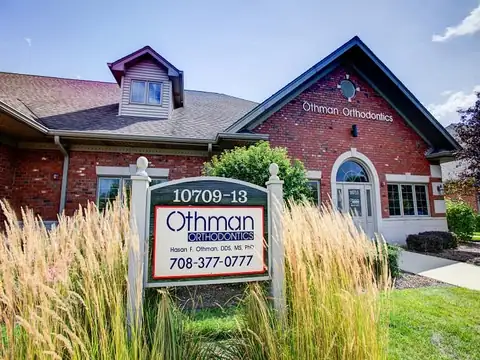
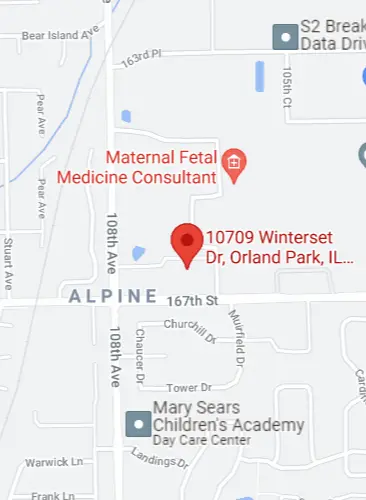
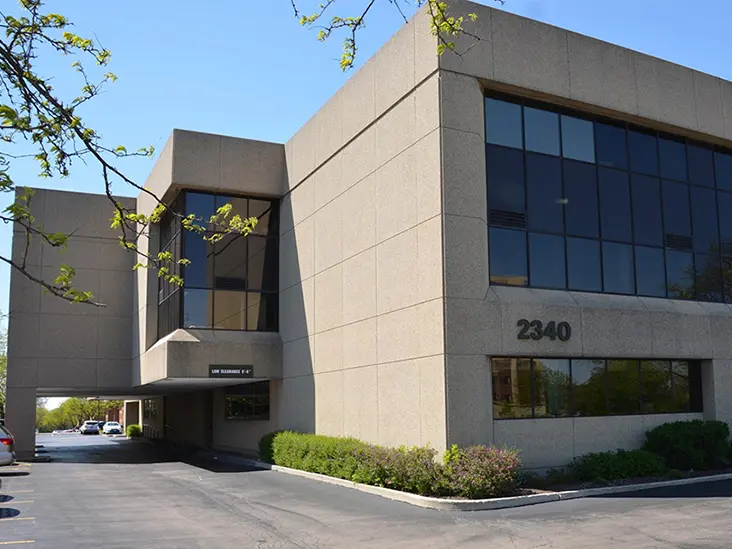
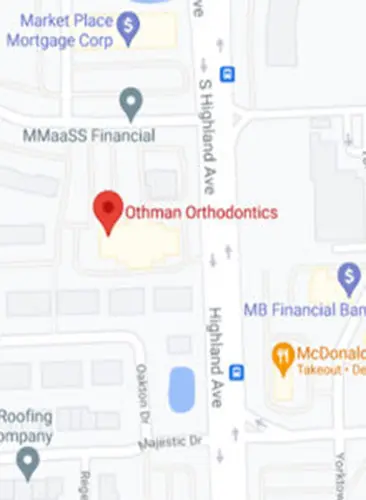
You will leave knowing whether treatment is recommended now, later, or not at all; what it would involve; and how long it is likely to take. If you are comparing offices, our Lombard location page has directions, hours, and contact details — Lombard patients can reach us at (630) 424-9070, and Orland Park patients at (708) 377-0777.
Ready to find out what your overbite actually needs? Request an appointment and we will measure first and advise honestly — including if the right answer is simply to monitor things for now.
Frequently Asked Questions
Can overbite treatment Lombard IL fix my bite without surgery?
Usually, yes. Most overbites are corrected with braces, elastics, bite turbos, or — in selected mild to moderate cases — clear aligners. Surgery is reserved for severe skeletal mismatches in adults whose growth is complete, and we will tell you at the consultation if your case falls in that small group.
At what age should an overbite first be checked?
The American Association of Orthodontists recommends a first orthodontic check-up no later than age 7. That visit is an evaluation, not automatic treatment; it lets the orthodontist use growth guidance if the overbite is skeletal, or simply monitor a dental overbite until the timing is right.
Will fixing my overbite help my jaw pain?
It can help when the pain is related to how the bite forces the jaw to close, but jaw pain has many causes. At your visit we will look at whether your bite is a plausible contributor and be straightforward if your symptoms point to a different cause that needs a different kind of care.
Do elastics really matter that much for an overbite?
Yes. Braces and aligners position teeth, but elastics are often the tool that changes the bite relationship itself. Wearing them exactly as directed — and only removing them as instructed — is one of the strongest influences on both your result and your treatment time.
Will my overbite come back after treatment?
Deep bites can relapse if retainers are not worn, which is why every overbite treatment Lombard IL plan we write includes a retention phase. Wearing your retainers as directed and coming to follow-up checks gives your corrected bite its best chance of staying corrected.
This article is general information, not medical advice — please consult Othman Orthodontics for recommendations for your specific bite.