Braces and aligners do not have to put life on hold. Our patients play travel soccer, wrestle, march in the band, cheer, and head off to college in the middle of treatment. What makes the difference is a little planning: the right mouthguard on the field, and a realistic routine once you are living away from home.
This guide covers braces and sports, plus college life, for athletes of any age and for students (and parents) getting ready for college.
Part 1: Braces and Sports
Yes, you can keep playing
You can play nearly any sport with braces, from football and hockey to basketball, volleyball, softball, lacrosse, gymnastics and martial arts. The goal is to protect three things: your teeth, the soft tissues of your lips and cheeks, and the braces themselves.
Why a mouthguard matters even more with braces
The American Dental Association recommends a properly fitted mouthguard for sports and recreational activities with a real risk of mouth or face injury, and notes that mouthguard use has been shown to reduce sports-related dental injuries (ADA: Athletic Mouth Protectors). With braces, a hit to the face can also push the lips or cheeks into the brackets or bend a wire. A mouthguard acts as a cushion and a barrier between the hardware and the soft tissue. ADA guidance also points out that injuries happen in non-contact activities such as gymnastics and skating, not just in collision sports (ADA MouthHealthy: Mouthguards).
Choosing a mouthguard
- Stock (one-size-fits-all) guards: inexpensive, but often bulky and loose, especially over braces. We generally steer athletes away from them.
- Standard boil-and-bite guards: molded at home. Over braces they can grip the brackets too tightly and stop fitting as teeth move.
- Orthodontic mouthguards: designed with extra room for brackets and for tooth movement during treatment. They are a practical choice for many players.
- Custom guards: made from a model of your teeth for the best fit. The AAO notes that custom-fitted guards often interfere less with speech than bulkier store-bought ones (AAO: Orthodontic Mouthguards). During active treatment, timing matters because teeth are still shifting.
Depending on your braces and your sport, we may suggest covering the lower teeth too. Bring your mouthguard to your appointments if you have questions about fit.
Aligners and removable appliances
Clear aligners are not a substitute for a sports mouthguard. For contact sports, we will usually have you take your aligners out, store them in their case, and wear a separate guard during play. Put the aligners back in right after the game. The ADA also advises against wearing a removable retainer or similar appliance during contact sports. If you or your teen is considering Invisalign Teen, we will talk through how it fits a sports schedule.
If you take a hit to the mouth
- Check first: look for loose, chipped or displaced teeth, cuts, and bent or broken parts of the braces.
- Minor problems: rinse with cool or salt water, apply gentle pressure with clean gauze for small cuts, and cover sharp spots with orthodontic wax.
- Call our office if a bracket is loose, a wire is badly bent or poking, or a tooth seems loose or out of place.
- Go to emergency care first for a knocked-out tooth, heavy bleeding, severe pain or a possible jaw injury, then call us to plan follow-up.
Our life with braces page covers day-to-day fixes for loose wires, brackets and soreness.
A simple game-day kit
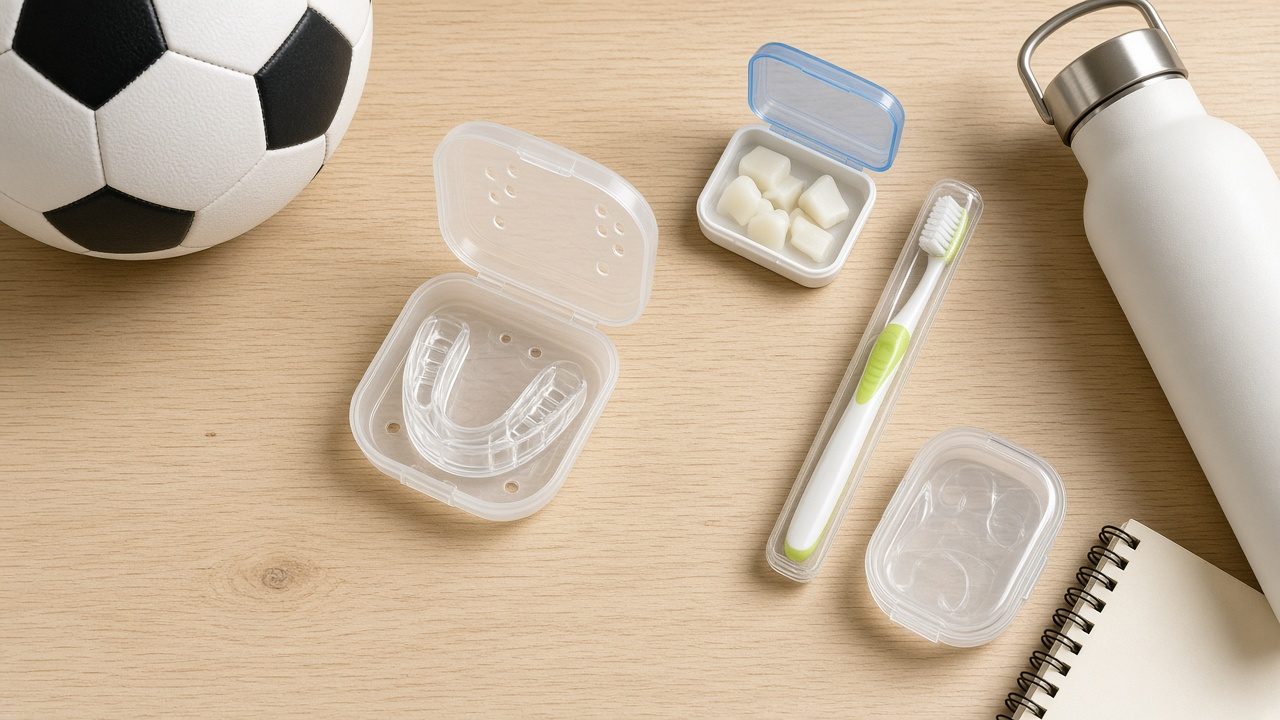
- Mouthguard in a ventilated case
- Orthodontic wax and a travel toothbrush
- Aligner case, if you wear aligners
- A water bottle, so you can rinse after sports drinks
Part 2: Braces and Aligners at College
Many students start treatment in high school and finish while they are in college. That works well with a plan in place before move-in day.
Plan ahead before you leave
Schedule a visit before you go. We will review where treatment stands, estimate how much time is left, and see whether your visits can line up with the academic calendar. Depending on your case and appliance, it may be possible to:
- Schedule key visits around fall break, Thanksgiving, winter break, spring break and summer
- Space adjustments a bit further apart if your treatment allows it
- Plan milestones, such as finishing treatment and starting retainers, for a break at home
Every case is different, so we will tell you honestly what is realistic. Booking break appointments early helps you get times that fit travel plans.
Pack a braces or aligner kit
- Extra wax, a travel toothbrush, fluoride toothpaste, floss threaders or interdental brushes
- A small mirror for checking wires and brackets
- For aligner patients: your next sets as directed, at least two cases, and chewies if we recommend them
- Your retainer case and any backup retainer, if you are finishing up
Dorm-life hygiene and food
Busy schedules and shared bathrooms make it easy to skip steps, and plaque around brackets can lead to white spots and cavities. Keep a toothbrush in your backpack for brushing after meals. Cut hard foods like apples, carrots and crusty bread into small pieces, and skip sticky candy, popcorn and very hard snacks. Sipping soda, sweetened coffee or sports drinks all day keeps teeth bathed in sugar and acid. Water is your friend.
Aligners: wear time is everything
Clear aligners can be a great fit for college because they come out for meals and brushing, and several sets can often be dispensed at a time. They only work if you wear them, though: Invisalign treatment is generally planned around wearing aligners 20 to 22 hours a day. Set phone reminders for tray changes. Keep aligners in their case, never wrapped in a napkin (dining-hall trays are where aligners go to disappear). Take them out for anything other than plain water.
Handling small problems away from home
A poking wire can usually be covered with wax until you can call us. A loose bracket that is still attached to the wire can often wait, but let us know. Rinse with warm salt water for cheek irritation. When you are not sure whether something can wait, call the office and we will help you decide on next steps. For a true dental or facial injury, get urgent care where you are first.
Retainers on campus
Once braces come off, retainers keep teeth from drifting. The AAO’s advice is simple: “If it’s not in your face, it should be in your case” (AAO: Retainers). Keep retainers away from heat, including hot water, car dashboards and dishwashers, and out of reach of pets. If one is lost or broken, call us right away instead of waiting for the next break.
Planning Treatment Around a Busy Life
If you are a student-athlete, or a parent wondering whether to start treatment before senior year, we are happy to talk through timing. Free consultations are available at our Lombard and Orland Park offices, and our first-visit guide explains what happens. Call Lombard at (630) 424-9070 or Orland Park at (708) 377-0777.
Frequently Asked Questions
Do I need a special mouthguard with braces?
A guard that fits over your braces and leaves room for tooth movement is best. Orthodontic or custom guards usually fit better than stock or standard boil-and-bite guards. Ask us which suits your sport and stage of treatment.
Can I wear my aligners instead of a mouthguard?
No. Aligners are not designed to absorb impact. For contact sports, remove them, store them in their case, and wear a real mouthguard.
How often will I need appointments during college?
It depends on your treatment. Many students can line visits up with school breaks, and we will set a schedule with you before you leave.
What if I lose my retainer at school?
Call us as soon as possible. Teeth can shift when retainers are not worn, and we will let you know how to get a replacement made.