Many adults come to us with a smile they have been quietly working around for years: a crowded front tooth they hide in photos, a gap that has widened over time, an old orthodontic result that has drifted. Some want straighter teeth and nothing more. Others are planning a larger smile makeover with their dentist and want to know where orthodontics fits in.
Either way, the good news is the same. As the American Association of Orthodontists puts it, healthy teeth can be moved at any age, and adults in their 60s, 70s and 80s are among those benefiting from treatment (AAO: Adult Orthodontics FAQ). This guide covers how orthodontics can anchor an adult smile makeover alongside cosmetic dentistry, what adult treatment options look like, and the confidence side of the equation that patients tell us matters just as much.
Why Orthodontics Often Comes First in an Adult Smile Makeover
When the goal is a better-looking smile, it is tempting to go straight to veneers or crowns. In many cases, though, moving the teeth into better positions first gives your dentist a better foundation to work on.
- Less tooth reduction. When teeth are crowded or tilted, a dentist may need to remove more enamel to make veneers or crowns line up. Aligning the teeth first can reduce how much reshaping is needed, and sometimes how many teeth need restorations at all.
- Restorations that last. The AAO notes that veneers are easier to place and last longer when teeth are straight and the bite has been corrected.
- A healthier bite. Correcting how the teeth meet can reduce uneven wear and make chewing more comfortable.
- Easier cleaning. The AAO also notes that better alignment makes oral hygiene easier, which supports gum health (AAO: Adult Orthodontics).
Think of orthodontics as setting up the canvas before the finishing touches.
How Orthodontics Works With Your Dentist’s Treatment
Whitening
Professional whitening is usually done near the end of orthodontic treatment or after it, so the shade is even across the teeth once brackets are off or aligners are finished. Your dentist will advise you on the best timing and method.
Bonding and contouring
Once teeth are aligned, small chips, worn edges or slightly uneven lengths often become easier to see and easier to fix. Your dentist can smooth and reshape these areas with tooth-colored bonding or gentle contouring. This is frequently a more conservative alternative to multiple crowns or veneers.
Veneers
Veneers can address discoloration that whitening cannot, or change the shape and size of teeth. The ADA points out that placing veneers is not reversible because enamel is removed, that any decay or gum disease must be treated first, and that veneers may not be a good choice for people who grind their teeth or have a deep overbite (ADA MouthHealthy: Veneers). Correcting the bite first can make veneers a better option for some of those patients.
Crowns, implants and missing teeth
When a tooth is missing, neighboring teeth often tip into the space. Orthodontics can upright those teeth and create the right amount of room for an implant, bridge or crown, so your dentist or surgeon can place a restoration that fits and functions well.
Coordinating the sequence
The most successful makeovers are a team effort. We move the teeth and refine the bite, and your general or cosmetic dentist handles whitening, bonding, veneers or restorations. We share records and plan the order of steps together so each one builds on the last.
Adult Treatment Options
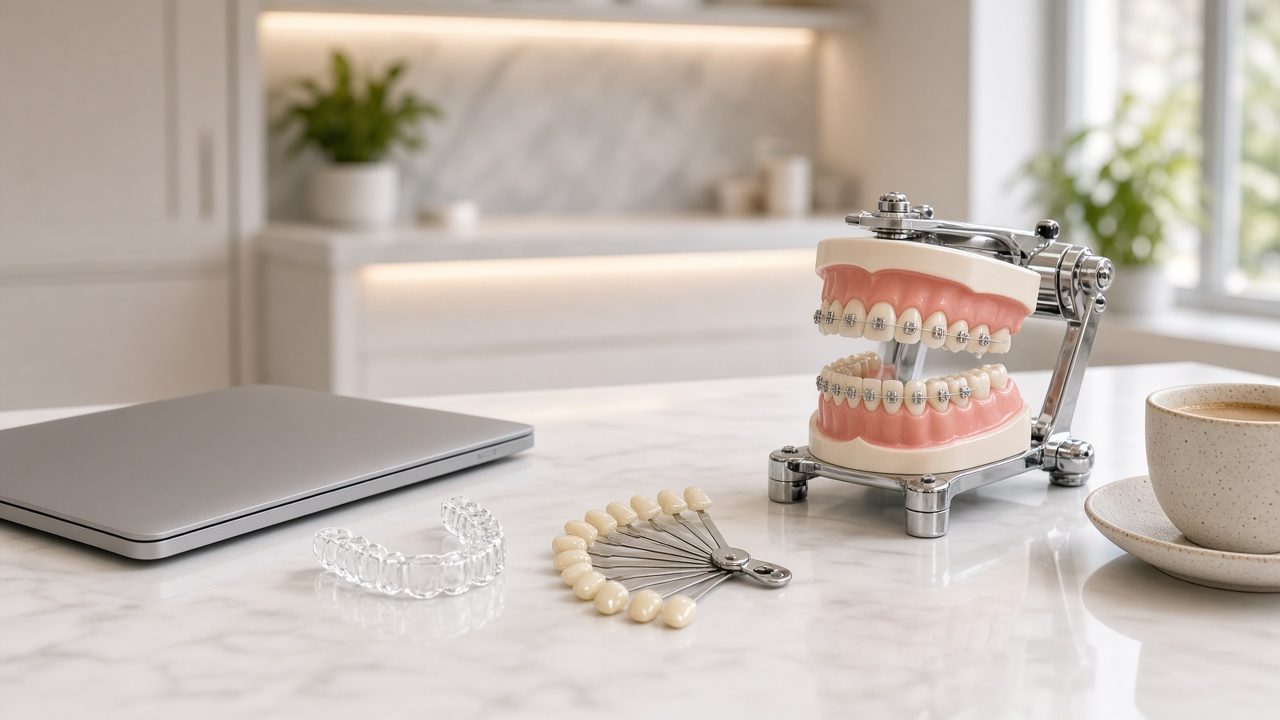
Many adults hesitate because they picture a mouthful of metal. Today there are several discreet choices. Each has strengths, and the right one depends on your bite, your goals and your daily life:
- Invisalign: clear, removable aligners that are popular with professionals. They work best when worn consistently.
- Clear (ceramic) braces: tooth-colored brackets that blend in while offering the control of fixed braces.
- Incognito lingual braces: custom braces bonded to the back of the teeth, so they are hidden from view.
- Traditional metal braces: still an efficient, cost-effective choice for many adults.
Our adult orthodontics page explains how adult care differs from treating children. For example, adult jaws have finished growing, and gum and bone health deserve extra attention. As the AAO notes, adult treatment may also take somewhat longer than treatment for children. At your consultation we will give you a realistic estimate for your case rather than a general number.
The Confidence Side of a New Smile
Orthodontics is a health treatment, but for many people the most noticeable change is how they feel. Adults often tell us they have spent years smiling with their lips closed, angling away from cameras, or feeling self-conscious in meetings and on video calls.
Research supports the idea that treatment can affect well-being. A systematic review and meta-analysis of studies in patients under 18 found that orthodontic treatment was associated with a moderate improvement in oral health-related quality of life, particularly emotional and social well-being, while noting that more high-quality studies are needed (Javidi et al., American Journal of Orthodontics and Dentofacial Orthopedics, 2017). Experiences vary from person to person, and we cannot promise any particular emotional outcome. Still, many adults describe a quieter kind of benefit: no longer thinking about their teeth at all.
Confidence along the way, not just at the end
Treatment is a process. There is usually some nervousness at the start, a short adjustment period, then the motivating stretch where you see progress in the mirror. Choosing an option that fits your work and social life, such as aligners or lingual braces, can make that journey easier for adults who are concerned about appearance during treatment.
Keeping the result
Teeth naturally tend to shift over time, which is why retainers are part of every plan. Wearing them as directed is the best way to protect both your investment and the confidence that comes with it.
Is It Worth Exploring?
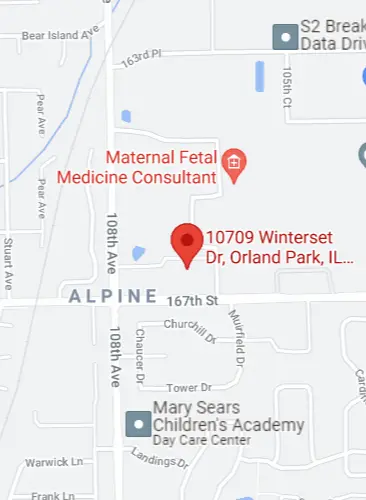
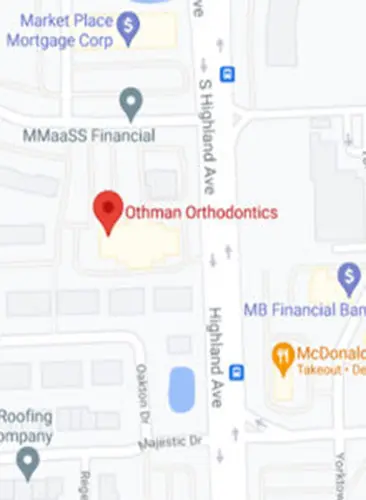
If your smile is something you have been working around, a conversation costs nothing. Consultations with Dr. Othman, a Diplomate of the American Board of Orthodontics with more than 20 years of experience, are free at both our Lombard and Orland Park offices. Zero-interest payment plans are available if you decide to move forward. We will listen to your goals, examine your teeth and bite, and, if you are working with a cosmetic dentist, outline how the two treatments could fit together. Call Lombard at (630) 424-9070 or Orland Park at (708) 377-0777.
Frequently Asked Questions
Am I too old for orthodontic treatment?
Healthy teeth can be moved at any age. What matters more than age is the health of your gums and the bone supporting your teeth, which we evaluate at your consultation.
Should I get veneers instead of braces or Invisalign?
Veneers change the surface of teeth; orthodontics changes their position and the bite. For many people, aligning teeth first reduces how much enamel needs to be removed, or how many veneers are needed. Your orthodontist and dentist can help you compare approaches.
When should I whiten my teeth?
Usually near the end of orthodontic treatment or after it, so the color is even. Your dentist will recommend the right timing and method.
How long does adult treatment take?
It depends on how much the teeth and bite need to change, and adult treatment can take somewhat longer than treatment for children. We will give you a personalized estimate after your exam.
Sources
- American Association of Orthodontists. Adult Orthodontics FAQ
- American Association of Orthodontists. Adult Orthodontics
- ADA MouthHealthy. Veneers
- Javidi H, Vettore M, Benson PE. Does orthodontic treatment before the age of 18 years improve oral health-related quality of life? A systematic review and meta-analysis. Am J Orthod Dentofacial Orthop. 2017